
You updated your website. Maybe you rewrote a service page, published a new blog post, or finally cleaned up content that was years out of date. Then you check Google, and nothing has changed. It looks exactly the same as before.
That’s frustrating. But it doesn’t mean something went wrong.
Google refreshes search results continuously, but the timing depends on three separate processes: crawling, indexing, and ranking updates. Each one works on its own schedule.
Understanding how they interact is the key to knowing what to expect and what you can do to move things along.
TL;DR: Google refreshes results through three stages: crawling, indexing, and ranking updates. Each runs on its own schedule. New pages can take hours to several weeks to appear in search, and meaningful ranking changes typically take weeks to months, not days.
Three Things Google Refreshes (And When)
Most people treat “Google refreshing results” as a single event. It’s actually three distinct processes, each running on its own timeline.
Crawling: How Often Does Google Crawl a Site?
Before Google can show your page in search results, its bots (called Googlebot) have to find it. Crawling is how Googlebot visits websites, scans their content, and detects changes since the last visit.
How often does Google crawl a site? It depends on the site. High-authority sites that publish frequently may be crawled multiple times a day. Smaller or infrequently updated sites might see Googlebot only every few weeks. A few factors shape that frequency:
- Publishing frequency: Regular updates signal to Google there’s a reason to return
- Backlink authority: Sites with strong backlink profiles tend to earn more frequent crawl visits
- Site speed: Slow pages burn through crawl budget, meaning Google processes fewer pages per visit
- Site age and history: Newer sites are crawled less until they establish a track record
According to Google’s crawling and indexing documentation, Googlebot determines visit frequency algorithmically, changing as your site’s signals strengthen over time.
Indexing: How Google Processes and Stores Content
Being crawled doesn’t mean you’re in Google’s index. After Googlebot visits a page, Google decides whether to add it to its search index.
Indexing can take anywhere from a few hours to several weeks. New pages on established, well-linked sites tend to get indexed quickly. A new website with no backlinks might wait weeks before anything appears in results.
A page can be crawled and still not be indexed. If Google detects thin content, duplicate content, or technical issues such as a noindex directive, it won’t add the page to its index, regardless of how often Googlebot visits.
Ranking Updates: When Results Actually Change
This is usually what people mean when they ask about Google “refreshing” results. Rankings update at two different scales.
Continuous Micro-Updates
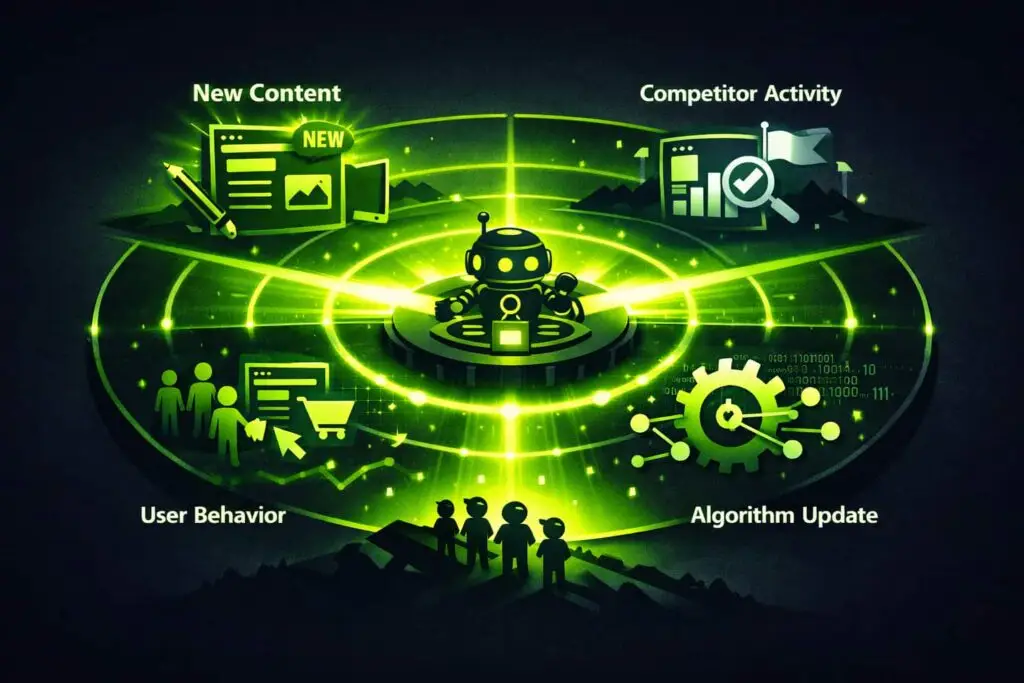
Continuous micro-updates run in the background every day, accounting for freshness signals, user behavior, and ongoing algorithm changes. For most sites, they’re barely noticeable unless you’re monitoring specific keyword positions.
Google Core Updates
Google Core Updates are a different story. Rolled out several times per year, Core Updates can trigger significant ranking shifts across broad categories of websites. According to Google’s documentation on ranking systems, these updates show how Google evaluates content quality, relevance, and expertise.
How Long Does It Realistically Take?
There’s no single answer, but here are honest timelines based on how Google typically behaves:
| Scenario | Typical Timeline |
| New website | 2–6 months to begin ranking meaningfully |
| New page on existing site | Days to a few weeks to appear in index; weeks to months to rank |
| Updated content on existing page | Days to a few weeks for changes to be reflected |
| After a Google Core Update | Rankings may shift within days of rollout |
These are ranges, not guarantees. The actual timeline depends on your domain authority, the competitiveness of the target keywords, the strength of your content, and the page’s search optimization.
A page targeting a low-competition keyword on an established domain might rank within days. A new website competing in a busy market could take six months just to land on page two. Both outcomes are normal. The context is everything.
What Can Speed Up Google Refreshing Your Site?
You can’t force Google’s timeline. But you can remove friction and send clearer signals that prompt faster action.
Submit Your Sitemap via Google Search Console
A sitemap tells Google which pages exist on your site and where to find them. Submitting it through Google Search Console doesn’t guarantee immediate crawling, but it gives Googlebot a clear map to follow, especially valuable for new sites or pages that were recently added.
Request Indexing for Individual URLs
Google Search Console’s URL Inspection tool lets you manually request indexing for a specific page. After publishing new content or implementing major changes to an existing page, this is often the most direct way to get Google’s attention. It won’t skip Google’s quality evaluation, but it puts the page in the crawl queue sooner rather than later.
Earn Backlinks to New Content
Links from other websites tell Googlebot that a page is worth visiting. They also function as signals of trust. New pages with even a handful of quality backlinks tend to get indexed faster than isolated pages with none. If you can get relevant sites to link to new content, that’s one of the most effective crawl accelerators available to you.
READ: Is Link Building Still Relevant To SEO
Keep Your Site Fast and Technically Clean
A slow, error-prone site wastes Google’s crawl budget. When Googlebot encounters broken pages, redirect chains, or sluggish load times, it processes fewer of your pages per visit. A technically sound site (fast, with no broken links and a clean URL structure) gets crawled more efficiently and consistently. This is one area where other SEO factors that affect your rankings frequently overlap with technical performance.
What About Google Core Updates?
Several times per year, Google releases Core Updates that recalibrate how it evaluates content. These aren’t targeted penalties. They’re adjustments to Google’s definitions of quality, relevance, and expertise across the board.
A site that ranked well one week might drop noticeably after a rollout, even if nothing on the site has changed. That’s because Core Updates re-rank pages relative to each other, not in response to something a specific site did wrong.
Core Updates reward quality, accurate, helpful content that serves the reader’s intent. Sites that are losing ground are advised to focus on content depth and E-E-A-T signals rather than pursue technical shortcuts. The fix is almost always about substance, not tricks.
Build a Site that Google Refreshes Consistently
Understanding how Google refreshes search results is a useful starting point. Building a site that earns consistent, long-term rankings is where the real work begins.
At Sierra Exclusive, we help small and mid-sized businesses in Sacramento and beyond develop SEO strategies that align with Google’s processes, not against them. That means technically sound websites, content that earns backlinks naturally, and an ongoing approach that keeps your site relevant as Google’s algorithm evolves.
If your rankings aren’t where they should be, contact us and we’ll dig into what’s going on with your site.
Frequently Asked Questions
How often does Google crawl a site?
It depends on the site. High-authority, frequently updated sites can be crawled daily. Smaller or less active sites may only see Googlebot every few weeks. Site authority, publishing consistency, and technical health all influence how often Google comes back.
How often does Google update search results?
Continuously. Small ranking adjustments occur in the background every day. Larger shifts come with Core Updates, which roll out several times per year. After making changes to your site, allow a few days to a few weeks before expecting them to show up.
How long does Google indexing take?
Anywhere from a few hours to several weeks. Established sites with strong backlinks tend to index new pages quickly. Newer sites with limited authority can take considerably longer. Requesting indexing in Google Search Console can help move things along.
How long does it take to rank on Google?
At minimum, three to six months for most new content, often longer in competitive niches. The timeline depends on domain authority, content quality, and keyword competition. Low-competition keywords can move faster, but first-page rankings require consistent SEO effort, not a one-time fix.
How do I get Google to crawl my site faster?
Submit your sitemap through Google Search Console, use the URL Inspection tool to request indexing for specific pages, earn backlinks to new content, and keep your site technically clean. Fast loading speed and a clear site structure help Google crawl more pages per visit.