
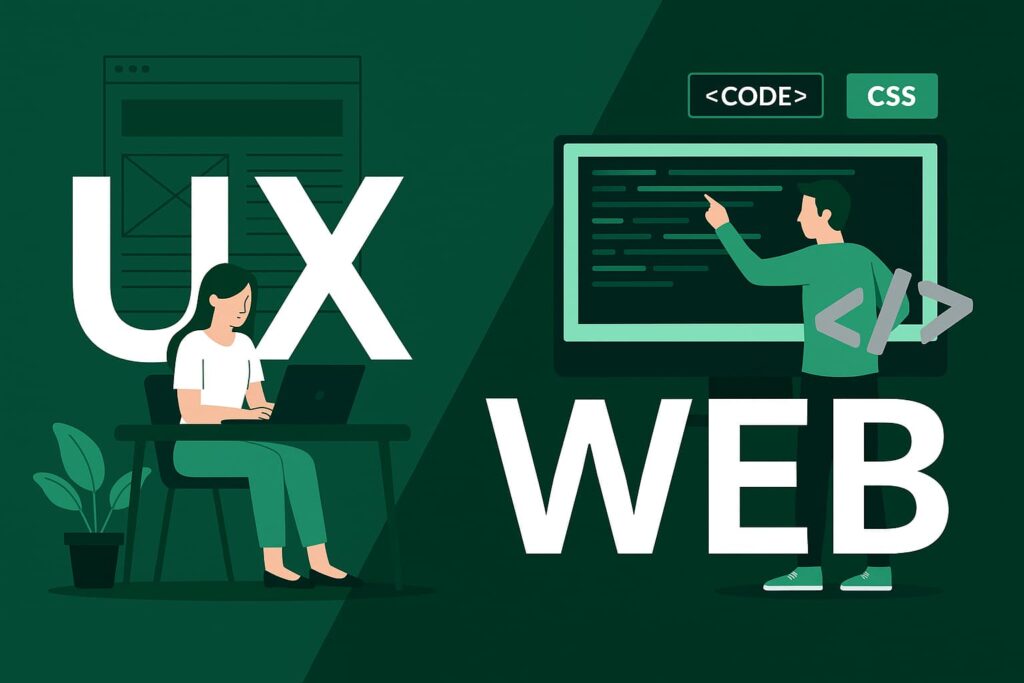
Launching a website is one of the biggest milestones for any business, but before writing a single line of code or choosing a template, you need to understand one critical distinction: UX design vs web development are not the same thing.
And confusing the two is one of the most common reasons website projects go over budget, miss deadlines, or fail to perform. In fact, improving the user experience can boost conversion rates by up to 200%. This shows how dramatically UX can impact business results.
That’s why knowing the difference between UX designers and developers and how they work together can determine whether your website becomes an asset or a liability.
What Is UX Design?
User Experience (UX) design focuses on how users interact with your website such as:
- How easily they navigate
- How intuitive it feels
- How smoothly they can complete tasks
The primary goal of UX is to create a seamless, frustration-free experience that leads visitors toward desired actions.
A UX designer’s responsibilities include:
- User research
- Competitor analysis
- Creating wireframes and prototypes
- Mapping user flows
- Structuring information architecture
- Testing experience and usability
From a business perspective, UX isn’t about making things “look pretty.” It’s about reducing friction, increasing conversions, and ensuring your website supports the way customers naturally behave.
When UX is done right, users stay longer, engage more, and convert at higher rates. When it’s ignored, even the best-looking website won’t perform.
What Is Web Development?
If UX is the blueprint, web development is the construction. Web development is the technical process of building and maintaining the website, turning the UX designer’s prototypes into a fully functional, responsive site.
There are two major sides to development:
Frontend development
This includes everything users visually interact with: layouts, animations, buttons, forms, navigation, and styles. Frontend developers typically work with HTML, CSS, JavaScript, and front-end frameworks.
Backend development
This powers the behind-the-scenes functionality like servers, databases, APIs, logic, and processes. Backend developers ensure that logins work, shopping carts store information, pages load fast, and data flows properly.
For businesses, strong development ensures:
- fast load times
- secure data handling
- clean code structure
- scalability for future growth
- reliable integrations (CRM, payment gateways, automation tools, analytics)
In short: UX makes the website usable. Development makes it work. You need both to build something that performs.
UX Design vs Web Development: Key Differences
Although UX designers and developers work toward the same goal, they do completely different things in a website project.
Focus and Purpose
- UX design is strategic: It focuses on human behavior, decision-making, and ease of use.
- Web development is technical: It focuses on functionality, structure, and performance.
Process and Deliverables
- UX designers deliver wireframes, user flows, prototypes, and layout structures.
- Developers deliver fully coded web pages, integrations, backend systems, and performance optimizations.
Timing
UX almost always happens before development. Skipping UX often leads to more revisions during development, which increases costs and delays.
This distinction is essential because businesses often assume a developer “handles everything.” In reality, developers build what is provided. If the UX isn’t defined, developers are forced to make design decisions that may not align with user needs or business goals.
How UX Designers and Developers Work Together
A successful website requires both sides working in a coordinated sequence. Here’s how the process should ideally flow:
1. UX Comes First
This stage includes:
- research
- wireframes
- layout plans
- content hierarchy
- prototypes
This ensures the website structure aligns with user expectations and business goals before anything is built.
2. Development Follows
Developers take UX deliverables and turn them into a working website:
- coding the frontend
- building backend systems
- integrating tools
- setting up the CMS
- fixing bugs
- testing functionality
3. Collaboration Reduces Costly Revisions
A well-structured UX process reduces the risk of changes later. Fixing issues during development is 6-10 times more expensive than fixing them during design.
When both teams align early, the final website works smoothly, loads fast, and gives users the seamless experience they expect.
When Should a Business Prioritize UX Design First?
Many businesses jump straight into development, only to discover halfway through that users don’t like the navigation, the content feels cluttered, or the layout doesn’t match their conversion goals. Prioritizing UX is essential when:
1. Your website plays a major role in revenue
E-commerce stores, SaaS platforms, and booking-based businesses rely heavily on UX for conversions.
2. You’re creating a complex website
Membership sites, portals, dashboards, and apps require detailed user flows to function correctly.
3. You want to reduce bounce rates
If users leave quickly or don’t know where to click next, UX is the solution, not development.
4. You don’t have clear user behavior data
UX designers gather insights to guide the build, ensuring decisions aren’t based on guesses.
When Does Development Become the Priority?
Development takes center stage when:
1. The UX is already validated
If you’re redesigning an existing site that already performs well, development may only need to implement improvements.
2. The project requires complex functionality
Custom software, integrations, automation workflows, and heavy backend logic rely on strong engineering.
3. Speed and performance are the primary concerns
Page load time, caching, hosting setup, and database structure are development-led tasks.
4. You’re scaling or upgrading a site
When adding new features like a booking system or user dashboard, backend development becomes the priority.
Common UX Design and Web Development Mistakes Businesses Make
Before starting a website project, many businesses run into avoidable issues that slow down the process or hurt performance. Here are the most common mistakes:
- Skipping UX to “save time”
- Expecting developers to handle design decisions
- Designing while coding is already in progress
- Choosing tools or platforms before defining website goals
- Not aligning design and development teams early
- Assuming a visually appealing design automatically converts
- Ignoring mobile-first usability and layout planning
READ: Common Mistakes in Web Design for Landscapers (and How to Fix Them)
How to Plan a Website Project the Right Way
To ensure a smooth, successful website build:
1. Start with goals and user research
Identify user pain points, motivations, and expectations.
2. Approve UX deliverables before coding begins
This prevents rework during development.
3. Map out a unified timeline
Both designers and developers should know when handoffs and checkpoints happen.
4. Use a staging environment for reviews
This allows for testing design accuracy and functionality before going live.
5. Work with an agency that offers UX design + web development
Web design and development agencies like Sierra Exclusive streamline the process, ensure both teams work together, and reduce the risk of misalignment.
How Sierra Exclusive Supports Businesses With UX, Web Design, and Web Development
Building a high-performing website requires more than attractive visuals or clean code. It requires alignment between UX strategy, design execution, and technical development. Sierra Exclusive, a marketing agency in Sacramento, provides all three under one roof, making the website process smoother and more efficient for businesses.
Our team begins with UX research and wireframing to establish a strong strategic foundation. From there, our web designers craft conversion-focused layouts, and our developers build fast, secure, and scalable websites that match your functionality needs.
Whether you’re launching a new site, redesigning an existing one, or expanding with custom features, Sierra Exclusive ensures every stage works together seamlessly to support your long-term growth.
Conclusion
UX design and web development are two completely different yet equally important disciplines. UX ensures your website is intuitive, user-friendly, and conversion-focused. Development turns that vision into a fast, secure, and functional platform. When businesses understand these differences – and sequence UX before development – they save time, reduce costs, and build websites that actually perform.
If you’re planning a new website or considering a redesign, Sierra Exclusive can guide you through the entire process so you launch a website that delivers real business results. Reach out to our team today and let’s build a site designed for growth.
Frequently Asked Questions
Why is UX important before starting development?
UX ensures the structure, flow, and functionality of the website are planned before any coding begins. This prevents guesswork during development and reduces costly revisions. It also ensures the final website aligns with user behavior and business goals from day one.
Does investing in UX design reduce development costs later?
Yes, clear UX deliverables reduce rework by giving developers a precise blueprint to follow. When layouts and interactions are already validated, developers spend less time troubleshooting or rebuilding features. This leads to faster timelines and significantly lower development costs.
Can UX design help reduce bounce rate and improve SEO?
Yes, UX improves navigation, clarity, and page engagement, which keeps users on the site longer. Lower bounce rates send positive engagement signals to search engines. A well-structured UX also improves page crawlability and supports SEO-friendly architecture.
Can I build a website without doing UX design?
You can, but it often leads to unclear navigation, poor usability, and low conversions. Without UX planning, developers make layout decisions that may not support user needs or business objectives. Most businesses end up spending more later fixing issues that UX would have prevented.
How do UX designers and developers work together in a typical website build?
UX designers create wireframes, prototypes, and user flows that define how the site should look and function. Developers then use these assets as a blueprint to build the actual website. Both teams collaborate throughout the project to ensure the final product matches the approved design and functions flawlessly.